





What is Pediatric Speech Therapy?
Pediatric speech therapy focuses on addressing speech and language difficulties in children. Speech and language disorders can manifest in various ways, including articulation problems (difficulty pronouncing words), language delays (trouble understanding or using words), stuttering, or difficulties with social communication. Pediatric speech therapists, also known as speech-language pathologists (SLPs), work with children to enhance their ability to speak, understand language, and communicate effectively with others.
Speech therapy for children may also help with issues related to feeding and swallowing, which are also crucial for a child’s development. Early intervention is essential, as it can help children improve their communication skills, build confidence, and succeed in both academic and social settings.
What is a Pediatric Speech Therapy Initial Evaluation?
The initial evaluation is the first step in the speech therapy process and is crucial for creating a personalized treatment plan. During this evaluation, the speech-language pathologist (SLP) assesses the child’s communication abilities, identifies specific areas of difficulty, and determines whether therapy is needed.
The evaluation may involve:
- Interviews and questionnaires: The therapist will ask parents or caregivers about the child’s medical history, developmental milestones, and specific concerns related to communication and language.
- Observation: The SLP will observe the child in a natural setting to see how they communicate with peers, family members, and others.
- Standardized testing: The SLP may administer formal language assessments to evaluate the child’s speech, comprehension, and expressive language skills.
- Speech and language assessments: The SLP will assess the child’s ability to produce sounds clearly, understand language, use vocabulary, and form sentences.
Based on the evaluation results, the therapist will design a treatment plan that targets the child’s unique needs.
What Happens During a Pediatric Speech Therapy Session?
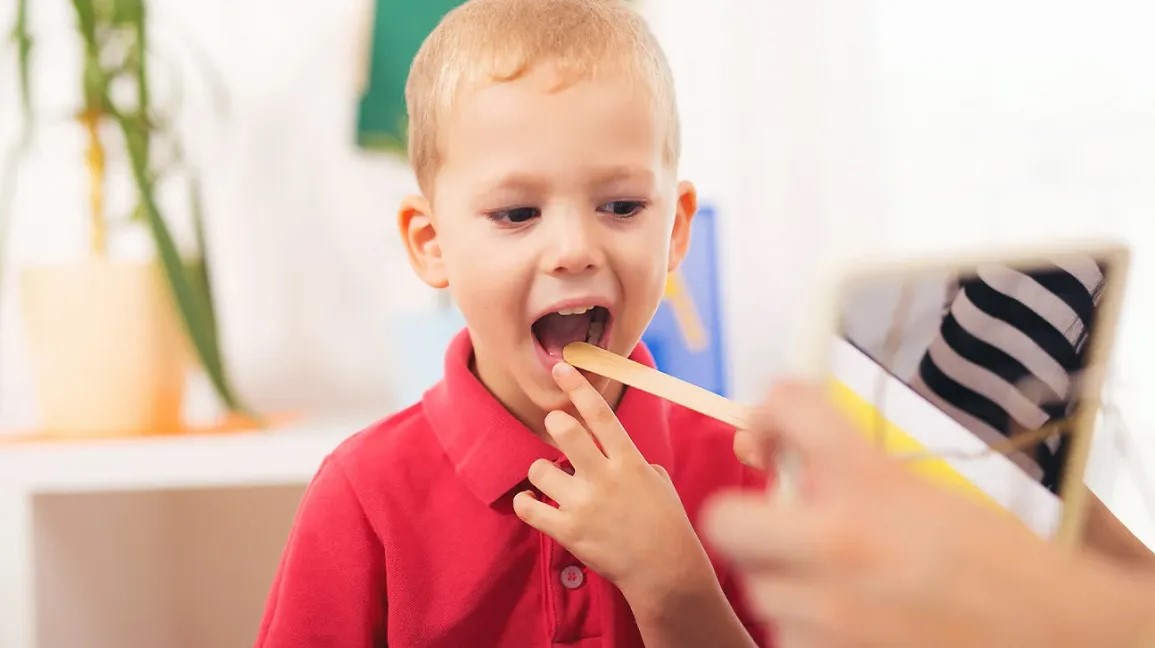
A pediatric speech therapy session typically lasts between 30 to 60 minutes, depending on the child’s age and attention span. The therapy is tailored to the child’s individual needs and may involve a combination of play-based activities, exercises, and games designed to improve speech and language skills.
Some common activities that might take place during a speech therapy session include:
- Articulation exercises: The child may practice producing specific sounds correctly through fun activities like games, flashcards, or songs.
- Language development activities: The therapist might work with the child to enhance their vocabulary, grammar, and sentence structure through storytelling, picture books, or interactive play.
- Social communication practice: The therapist may help the child with social skills like turn-taking, eye contact, or responding to questions in a conversation.
- Feeding and swallowing therapy: For children with feeding issues, the therapist may use specific techniques to improve chewing, swallowing, and oral motor coordination.
The therapist will use positive reinforcement and create a supportive environment where the child feels encouraged to participate and make progress.
How is Pediatric Speech Therapy Important?
Pediatric speech therapy is critical for helping children develop strong communication skills. Effective communication is necessary for children to form relationships with their peers and adults, succeed academically, and express themselves clearly. If a child struggles with speech or language development, it can lead to frustration, social isolation, and difficulties in school.
Speech therapy is particularly important for:
- Children with speech delays: Children who are late to talk or have difficulty pronouncing sounds correctly benefit from speech therapy to catch up with their peers.
- Children with language disorders: Therapy helps children who have trouble understanding language or using words and sentences correctly.
- Children with social communication challenges: Some children struggle with social interactions, and speech therapy can help them learn appropriate communication skills, such as taking turns in conversation or understanding non-verbal cues like facial expressions and gestures.
- Children with speech disorders due to conditions: Children with conditions like autism spectrum disorder (ASD), cerebral palsy, or hearing loss may require specialized speech therapy to address their specific challenges.
By providing targeted therapy, speech-language pathologists help children build the skills they need to thrive academically, socially, and emotionally.
How Can Progress Be Analyzed in Pediatric Speech Therapy?
Progress in pediatric speech therapy is tracked through regular evaluations and ongoing observations. The speech-language pathologist will assess the child’s progress in various areas such as:
- Speech clarity: Has the child’s articulation improved? Are they producing more accurate speech sounds?
- Language development: Is the child using more words, forming better sentences, or demonstrating improved comprehension of language?
- Social skills: Is the child improving their ability to interact with peers and adults? Are they better at taking turns in conversations or understanding non-verbal communication?
- Behavioral and emotional progress: Is the child becoming more confident in speaking and participating in social interactions?
Parents and caregivers play a key role in tracking progress as well. Regular feedback from them can help the therapist adjust the therapy plan and ensure that the child is benefiting from the sessions.
How Long Will Pediatric Speech Therapy Take?
The duration of pediatric speech therapy varies depending on the child’s specific needs and the severity of their speech or language disorder. Some children may make rapid progress and require only a few months of therapy, while others may need longer-term support.
- Mild speech or language delays: For children with mild delays, therapy may last anywhere from 6 months to a year, with noticeable improvements often within a few months.
- Moderate to severe speech or language disorders: Children with more complex issues, such as severe articulation difficulties or language disorders, may need longer therapy, possibly lasting several years.
- Medical conditions: If a child has a medical condition like autism or cerebral palsy, therapy may need to continue for a longer period, and it may involve a multi-disciplinary team to address other aspects of the child’s development.
Ultimately, the length of therapy is tailored to the child’s needs, and it’s important for parents to work closely with the therapist to ensure the child’s goals are being met.
Conclusion
Pediatric speech therapy plays a vital role in helping children develop essential communication skills. Early intervention can make a significant difference in a child’s ability to express themselves, understand others, and succeed in their social and academic lives. Through personalized evaluations, engaging therapy sessions, and ongoing progress assessments, children with speech and language difficulties can improve their abilities and gain confidence in their communication skills. With the right support, speech therapy provides a foundation for children to thrive and excel in the world around them.