





- Written by: admin@aspire.com
- September 9, 2026
- Categories: Uncategorized
- Tags:
Sensory Processing in Children: Signs, Challenges and How Occupational Therapy Can Help
Introduction
Children experience the world through their senses every day. Sounds, lights, textures, movement, smells, tastes, and touch all provide information that helps the brain understand and respond to the environment.
For some children, processing this sensory information can be challenging. They may become overwhelmed by certain sounds or textures, seek constant movement, avoid particular activities, or have difficulty participating in everyday routines.
These differences can affect play, self-care, learning, social participation, and family routines.
Understanding a child’s sensory needs can help parents and professionals provide appropriate support rather than assuming that a child is simply being difficult or uncooperative.
At Aspire Child Development & Rehabilitation Center, Occupational Therapists assess children’s individual sensory and functional needs and develop personalized strategies to support participation in everyday activities.
What Is Sensory Processing?
Sensory processing is the way the nervous system receives, organizes, and responds to information from the senses.
The commonly recognized sensory systems include:
- Visual: Information received through sight
- Auditory: Information received through sound
- Tactile: Information received through touch
- Taste: Information received through the mouth
- Smell: Information received through the nose
- Vestibular: Information related to movement and balance
- Proprioception: Information about body position and movement
Children respond to sensory information differently. What feels comfortable to one child may feel overwhelming or insufficient to another.
What Are Sensory Processing Difficulties?
Sensory processing difficulties occur when a child has challenges responding to or organizing sensory information in a way that affects everyday participation.
A child may be:
- Over-responsive to certain sensory input
- Under-responsive to sensory information
- Seeking additional sensory input
- Experiencing difficulty organizing responses to sensory experiences
These patterns can look different from child to child.
Signs of Sensory Processing Challenges
Sensitivity to Sounds
A child may:
- Cover their ears frequently
- Become distressed by loud sounds
- Avoid noisy environments
- React strongly to unexpected sounds
Busy classrooms, shopping centres, celebrations, or crowded environments may be particularly challenging.
Sensitivity to Touch
Some children may dislike:
- Certain clothing materials
- Clothing tags
- Hair brushing
- Nail trimming
- Being touched unexpectedly
- Certain textures during play
They may strongly prefer specific fabrics or clothing styles.
Sensitivity to Food Textures
Some children may have difficulty tolerating certain food textures, smells, or temperatures.
They may have a very limited range of accepted foods or strongly resist trying unfamiliar foods.
Feeding difficulties can have many possible causes, so professional assessment may be appropriate when they significantly affect nutrition or family routines.
Seeking Movement
Some children may constantly seek movement by:
- Jumping
- Running
- Spinning
- Climbing
- Bouncing
- Moving around frequently
Movement may help them feel more organized or alert.
Difficulty in Busy Environments
A child may become overwhelmed in places with:
- Many people
- Loud sounds
- Bright lights
- Strong smells
- Unexpected movement
This may affect participation in school, family outings, or community activities.
How Sensory Challenges Can Affect Daily Life
Sensory processing differences can influence many areas of childhood.
Self-Care
A child may struggle with:
- Dressing
- Grooming
- Bathing
- Tooth brushing
- Haircuts
- Nail trimming
Play
Sensory challenges may affect how a child explores toys, participates in movement activities, or interacts with different materials.
School Participation
A child may find it difficult to participate when the classroom environment contains distracting sounds, movement, textures, or other sensory input.
Learning
When a child is overwhelmed or unable to stay appropriately regulated, participating in learning activities may become more difficult.
Family Routines
Sensory-related challenges can make mealtimes, bedtime, shopping, travel, and other routines more demanding for both children and caregivers.
Sensory Processing and Emotional Regulation
Sensory experiences can influence how children respond emotionally.
For example, a child who is overwhelmed by noise may become upset or attempt to leave the environment.
This does not necessarily mean that the child is intentionally misbehaving.
Understanding the sensory factors involved can help parents identify what may be contributing to the child’s response.
Sensory Processing and Autism
Sensory differences can occur in children with Autism Spectrum Disorder (ASD).
Some autistic children may be highly sensitive to certain sensory experiences, while others may actively seek additional sensory input.
However, sensory processing differences are not exclusive to autism and can occur across different developmental profiles.
A professional assessment is important for understanding the individual child’s needs.
Sensory Processing and Other Developmental Conditions
Sensory-related challenges may also occur in children with:
- Developmental delays
- ADHD
- Neurodevelopmental disorders
- Genetic disorders
- Learning difficulties
The presence of sensory-related behaviors alone does not establish a diagnosis.
How Occupational Therapy Can Help
Occupational Therapy can help identify how sensory processing differences affect a child’s ability to participate in everyday activities.
Depending on the assessment, intervention may focus on:
Sensory Regulation
Helping children develop strategies that support participation and regulation during everyday activities.
Daily Living Skills
Supporting participation in dressing, grooming, feeding, and other routines.
Play Skills
Using motivating play activities to encourage exploration, interaction, and participation.
Motor Skills
Supporting fine and gross motor development when these areas affect functional participation.
Executive Function Skills
Helping children develop skills related to planning, organizing, starting, and completing everyday tasks.
School Participation
Working on strategies that can help children participate more comfortably and effectively in classroom activities.
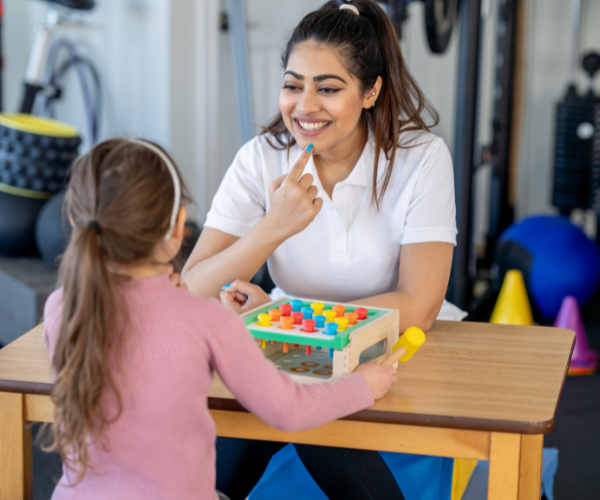
What Does a Sensory-Focused OT Session Look Like?
There is no single sensory activity that is appropriate for every child.
An Occupational Therapist may use activities involving:
- Movement
- Balance
- Resistance
- Touch
- Coordination
- Motor planning
- Functional play
The activities are selected based on the child’s assessment and goals.
The purpose is not simply to provide sensory input. The goal is to help the child participate more successfully in meaningful activities.
What Parents Can Do at Home
Observe Patterns
Pay attention to when sensory-related difficulties occur.
Consider:
- What happened before the reaction?
- What environment was the child in?
- Was there a particular sound, texture, smell, or movement?
- What helped the child recover?
Keeping track of patterns can provide useful information for professionals.
Prepare for Changes
If your child finds unfamiliar environments difficult, explaining what to expect may help make transitions more manageable.
Provide Predictable Routines
Consistent routines can help children understand what is happening next.
Follow Professional Guidance
Sensory strategies should be individualized. What helps one child may not be appropriate for another.
Parents should discuss persistent or significant concerns with a qualified professional.
When Should Parents Seek Professional Support?
Consider an Occupational Therapy assessment if sensory-related difficulties consistently:
- Interfere with daily routines
- Affect sleep or mealtimes
- Limit participation in school
- Restrict play activities
- Make self-care difficult
- Cause significant distress
- Affect family activities
- Prevent the child from participating in age-appropriate experiences
An assessment can help determine how sensory processing may be affecting the child’s functional participation.
Conclusion
Sensory processing affects how children experience and respond to the world around them.
When sensory differences interfere with everyday activities, understanding the child’s individual needs can make a significant difference.
Occupational Therapy can help assess how sensory processing challenges affect functional participation and develop individualized strategies to support regulation, independence, play, learning, and daily routines.
At Aspire Child Development & Rehabilitation Center, our Occupational Therapy services focus on practical goals that help children participate more confidently in home, school, and community environments.
If you have concerns about your child’s sensory responses or participation in everyday activities, consider speaking with a qualified Occupational Therapist for professional guidance and assessment.
Contact Aspire Child Development & Rehabilitation Center
Location: Villa 45, Al Rawda 3, Ajman, UAE
Phone: +971 56 962 6159 | +971 6 523 8784
Email: info@aspirecenter.ae
Frequently Asked Questions
Sensory processing is the way the nervous system receives, organizes, and responds to information from the senses.
No. Sensory processing differences can occur in children with different developmental profiles and do not by themselves indicate autism.
Occupational Therapy can assess how sensory differences affect a child’s everyday participation and provide individualized strategies and activities based on the child’s needs.
Signs may include strong reactions to sounds or textures, avoidance of certain activities, frequent movement seeking, difficulty with grooming, or becoming overwhelmed in busy environments.
Yes. Sensory challenges may make it difficult for some children to participate comfortably in classroom routines, group activities, or learning tasks.